 Sales & Marketing Automation
The CRM and Marketing Automation Guru's You Can Trust.
Sales & Marketing Automation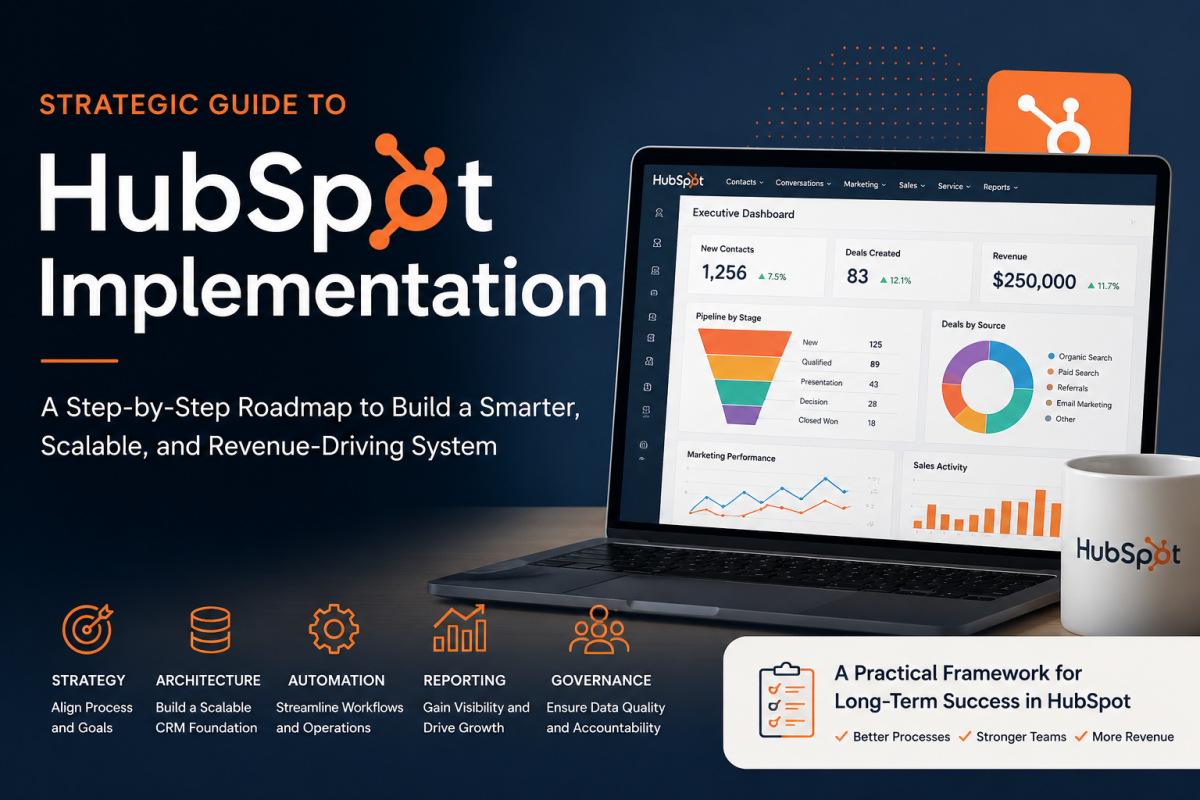
Implementing HubSpot correctly can transform the way a business manages marketing, sales, customer relationships, and revenue operations. However, many companies struggle with HubSpot implementation because they focus only on setup instead of building a scalable operational system.
A successful HubSpot implementation is not just about creating pipelines or importing contacts. It requires strategic planning, lifecycle design, automation architecture, reporting alignment, and ongoing governance.
In this guide, we’ll break down how to approach a successful HubSpot implementation strategically so your CRM becomes a true revenue-driving platform.
HubSpot implementation is the process of configuring HubSpot to support your company’s sales, marketing, customer service, and operational workflows.
This includes:
CRM setup
Contact and company data structure
Pipeline configuration
Lifecycle stages
Workflow automation
Reporting dashboards
Lead routing
Marketing automation
Integrations
User permissions
Data governance
A strategic HubSpot implementation aligns your technology, team processes, and customer journey into one scalable system.
Many businesses rush into HubSpot without fully defining:
sales processes
lead qualification
lifecycle stages
reporting requirements
automation logic
ownership rules
This leads to:
messy CRM data
duplicate contacts
unreliable reporting
poor sales adoption
broken automation
disconnected customer experiences
A proper HubSpot implementation solves these issues before they become operational problems.
Before configuring anything inside HubSpot, you need to clearly define your revenue process.
This includes:
How leads enter the business
How leads are qualified
Sales stages and handoffs
Customer onboarding
Retention and upsell opportunities
Reporting and forecasting requirements
Without this foundation, HubSpot simply becomes another database instead of a revenue operating system.
One of the most important parts of HubSpot implementation is creating a clean CRM architecture.
This includes:
Custom properties
Lifecycle stages
Lead statuses
Contact segmentation
Company associations
Deal pipelines
Naming conventions
A scalable CRM structure improves:
reporting accuracy
sales visibility
automation reliability
marketing segmentation
operational efficiency
Companies that skip this step often experience long term data quality issues.
Your sales pipeline should reflect how your sales team actually operates.
A strategic HubSpot implementation includes:
Deal stage definitions
Required fields
Win probability mapping
Task automation
Sales sequences
Lead routing
Pipeline reporting
The goal is to create accountability, visibility, and predictable forecasting.
Strong pipeline architecture also improves sales adoption because the CRM becomes easier to use.
HubSpot marketing automation helps businesses nurture leads, improve response times, and increase conversion rates.
Key automation areas include:
Lead nurturing workflows
Welcome sequences
Lead scoring
Internal notifications
Abandoned form follow-up
Re-engagement campaigns
Customer onboarding automation
A strategic HubSpot implementation ensures automation supports the customer journey instead of overwhelming users with unnecessary workflows.
Most companies rely on multiple systems for operations, sales, customer support, and marketing.
HubSpot implementation often includes integrations with:
Salesforce
Shopify
QuickBooks
Slack
Calendly
Twilio
Apollo
Marketing platforms
ERP systems
The goal is to create a connected operational ecosystem where data flows cleanly between platforms.
This improves:
operational efficiency
reporting accuracy
customer visibility
team productivity
One of the biggest benefits of HubSpot implementation is centralized reporting.
Your dashboards should provide visibility into:
Lead sources
Pipeline health
Conversion rates
Revenue forecasting
Sales activity
Marketing attribution
Customer retention
Lifecycle performance
Many companies build dashboards that show activity instead of meaningful business insights.
A strategic reporting structure focuses on actionable KPIs that leadership can use to make decisions.
CRM governance is one of the most overlooked parts of HubSpot implementation.
Without governance, systems become messy over time.
Governance includes:
Data hygiene rules
Duplicate management
User permissions
Workflow management
Naming standards
Lifecycle enforcement
Reporting consistency
Ongoing governance protects the integrity of your CRM and improves long term scalability.
Too many workflows can create operational complexity and maintenance issues.
Incorrect lifecycle stages create inaccurate reporting and lead confusion.
Duplicate contacts and inconsistent properties damage reporting reliability.
If sales teams don’t trust the CRM, implementation fails regardless of technical setup.
Without source tracking and UTM governance, marketing ROI becomes difficult to measure.
A well planned HubSpot implementation helps businesses:
Improve lead conversion
Increase sales visibility
Automate repetitive tasks
Improve reporting accuracy
Scale marketing operations
Create operational consistency
Increase customer retention
Align sales and marketing teams
When implemented correctly, HubSpot becomes the operational backbone of your revenue organization.
HubSpot implementation services are ideal for:
Growing B2B companies
SaaS businesses
Ecommerce brands
Professional service firms
Manufacturing companies
Agencies
Sales driven organizations
Especially businesses struggling with:
fragmented systems
poor CRM adoption
inconsistent reporting
lead management issues
manual operational processes
HubSpot implementation is much more than technical setup. It’s the process of designing a scalable revenue system that supports marketing, sales, customer operations, and long term growth.
Companies that approach HubSpot strategically see dramatically better adoption, reporting visibility, and operational efficiency than businesses that treat implementation as a simple software configuration project.
The most successful implementations combine:
CRM architecture
automation strategy
sales process design
reporting structure
governance
operational alignment
When these elements work together, HubSpot becomes one of the most valuable operational assets in the business.
Sales and Marketing Automation LLC helps businesses implement, optimize, and scale HubSpot for revenue growth, automation, reporting, and operational efficiency.
Services include:
HubSpot implementation
CRM cleanup
Sales Hub setup
Marketing automation
Lifecycle strategy
Reporting dashboards
RevOps consulting
Integrations and workflow automation