 Sales & Marketing Automation
The CRM and Marketing Automation Guru's You Can Trust.
Sales & Marketing Automation
A marketing automation platform migration is not a simple data transfer; it’s a strategic re-architecting of your entire revenue engine. While many organizations view the transition as a technical chore, elite teams recognize it as a rare opportunity to purge legacy inefficiencies and optimize for the 2026 regulatory landscape. You’ve likely spent years refining your lead scoring and nurture streams, so the prospect of rebuilding those models in a new environment feels both daunting and risky.
We understand the concern that “dirty” data might pollute your new system or that a service gap could stall your current revenue momentum. This framework provides the methodology needed to master these complexities while maintaining absolute data integrity. You’ll learn how to execute a seamless transition of assets, validate your new tech stack’s ROI, and ensure your ecosystem remains compliant with the latest CCPA and ADMT regulations. We’ll examine the specific steps to move from a fragmented legacy setup to a high-performance, integrated architecture.
Execute your marketing automation platform migration with the mindset of a strategic architect rather than a data clerk. This process represents a holistic re-alignment of your technology stack and business strategy. In 2026, the market for marketing automation has expanded to $11.19 billion, driven by a need for hyper-personalization and rigorous data compliance. New regulations, including expanded CCPA definitions of sensitive data and neural information, demand systems that are both agile and precise. A tactical “lift-and-shift” approach fails because it carries over years of technical debt. Instead, use this transition as a strategic opportunity to eliminate legacy inefficiencies and build a framework that supports your growth for the next decade.
A strategic migration allows you to audit every workflow, trigger, and tag. You can finally retire the “franken-system” of patches and workarounds that have accumulated over time. This architectural approach ensures that your new environment is clean, documented, and fully optimized from day one. By prioritizing the structural integrity of your data, you transform a potentially disruptive event into a catalyst for operational excellence.
Analyze your current system for friction points that hinder growth. Scalability issues, integration gaps with your CRM, and opaque reporting are common signals that your current tech stack has reached its ceiling. Determine if your current platform can handle the 14.20% projected compound annual growth rate seen in the broader industry. If your team spends more time fixing sync errors than building campaigns, the friction is costing you more than the price of a new platform. Align your migration objectives with 2026 revenue operations goals to ensure the new platform supports high-level business outcomes. When calculating the total cost of ownership, look beyond licensing fees to include mandatory onboarding requirements and the operational impact of team training.
Protect your revenue momentum by addressing the primary fear of every marketing leader: data loss and lead leakage. Establish a rigorous validation framework using multi-touch attribution and lead velocity metrics to ensure no contact or context is lost during the cutover. Create a “blackout” plan for the cutover period. This involves mapping every form on your website and every API call to ensure that leads don’t drop into a digital void. Success requires deep stakeholder alignment between Sales and Marketing departments to maintain a unified view of the customer lifecycle. By establishing a baseline of performance metrics before the move, you can prove the new system’s efficacy immediately after launch. A methodical approach ensures that your new system isn’t just a repository for contacts, but a validated engine for predictable growth.
Synchronizing the Marketing Automation Platform (MAP) with the CRM is the most technically demanding phase of any marketing automation platform migration. This connection serves as the nervous system of your revenue engine, requiring a bi-directional flow that maintains absolute data integrity across all touchpoints. In 2026, the complexity of these integrations has increased due to sophisticated API protocols and stricter data privacy requirements. You must re-map custom objects and unique identifiers with precision to ensure that sales teams have immediate access to marketing insights without encountering synchronization errors or orphaned records. If you require a technical partner to oversee this complex synchronization, our team provides expert CRM Data Migration services to bridge the gap between platforms.
Preserving historical engagement data is non-negotiable for accurate lead attribution and long-term trend analysis. When moving between ecosystems, the role of API integrations becomes paramount in maintaining a “Single Source of Truth.” You aren’t just moving contact names; you’re migrating the context of every interaction a prospect has had with your brand. This requires a methodical approach to data extraction and transformation that respects the unique architectural constraints of your new environment.
Data Schema Mapping is the blueprint for system interoperability, defining how data flows and transforms between disparate databases. When migrating between platforms like HubSpot and Salesforce, you must identify specific field mapping requirements for both standard and custom objects. Standardize data formats early to prevent the creation of duplicate records or the loss of critical demographic information. This alignment ensures that the data remains actionable for both the marketing and sales departments, providing a unified view of the customer journey from the first click to the final close. Investing in professional CRM implementation services at this stage ensures your data schema is architected for scalability rather than simply configured for immediate use.
Logic translation is rarely a one-to-one process because every platform utilizes a different proprietary automation language. You must manually translate legacy workflow logic into the new system’s specific architecture while auditing lead scoring models to reflect 2026 buyer behavior. The shift toward AI-driven predictive analytics means your scoring models should prioritize intent signals over simple vanity metrics. Before the final cutover, test all automated lead routing rules in a sandbox environment. This validation step confirms that leads are delivered to the correct sales representatives without delay, maintaining your revenue momentum from the moment the new system goes live.
Approach your marketing automation platform migration as a rigorous purge of technical debt rather than a simple relocation of files. Most organizations compromise their new system’s performance by attempting to “lift-and-shift” every asset created over the last decade. Instead, implement a strategy of Asset Rationalization. This process demands that you only migrate components with a proven history of driving revenue. By discarding orphaned assets and outdated nurture sequences, you ensure your new environment remains lean, efficient, and focused exclusively on high-performance outcomes.
Adopt a “Marie Kondo” philosophy for your MarTech ecosystem: if a specific workflow or template doesn’t provide tangible data value, eliminate it. Migrating “dirty” data or irrelevant content only replicates legacy inefficiencies in a more expensive environment. Before initiating the move, execute a strategic CRM data cleanup to ensure that your database is primed for the transition. This foundational step prevents the pollution of your new platform with duplicate records or unverified contacts.
Create a comprehensive inventory of every email template, landing page, and form currently in use. Categorize these assets into three distinct groups: Keep, Optimize, or Retire. High-performing assets should be documented with their technical dependencies, such as tracking scripts and third-party webhooks, to ensure they function correctly post-migration. Use this time to prepare high-fidelity design elements for re-platforming, ensuring brand consistency across all new digital touchpoints. Following established migration project schedule guidelines will help you allocate sufficient time for this inventory without delaying the technical cutover.
Perform a deep-dive marketing automation audit to identify broken legacy processes that could undermine your new architecture. This audit is particularly critical in 2026 as new CCPA regulations expand the definition of sensitive personal information to include neural data and information from minors. You must validate that your data collection methods and storage protocols meet these updated standards. Additionally, focus on technical deliverability by auditing your SPF, DKIM, and DMARC records for the new sending domain. Cleanse your prospect lists to remove hard bounces and low-intent records, ensuring that your initial sends from the new platform establish a high sender reputation from day one.
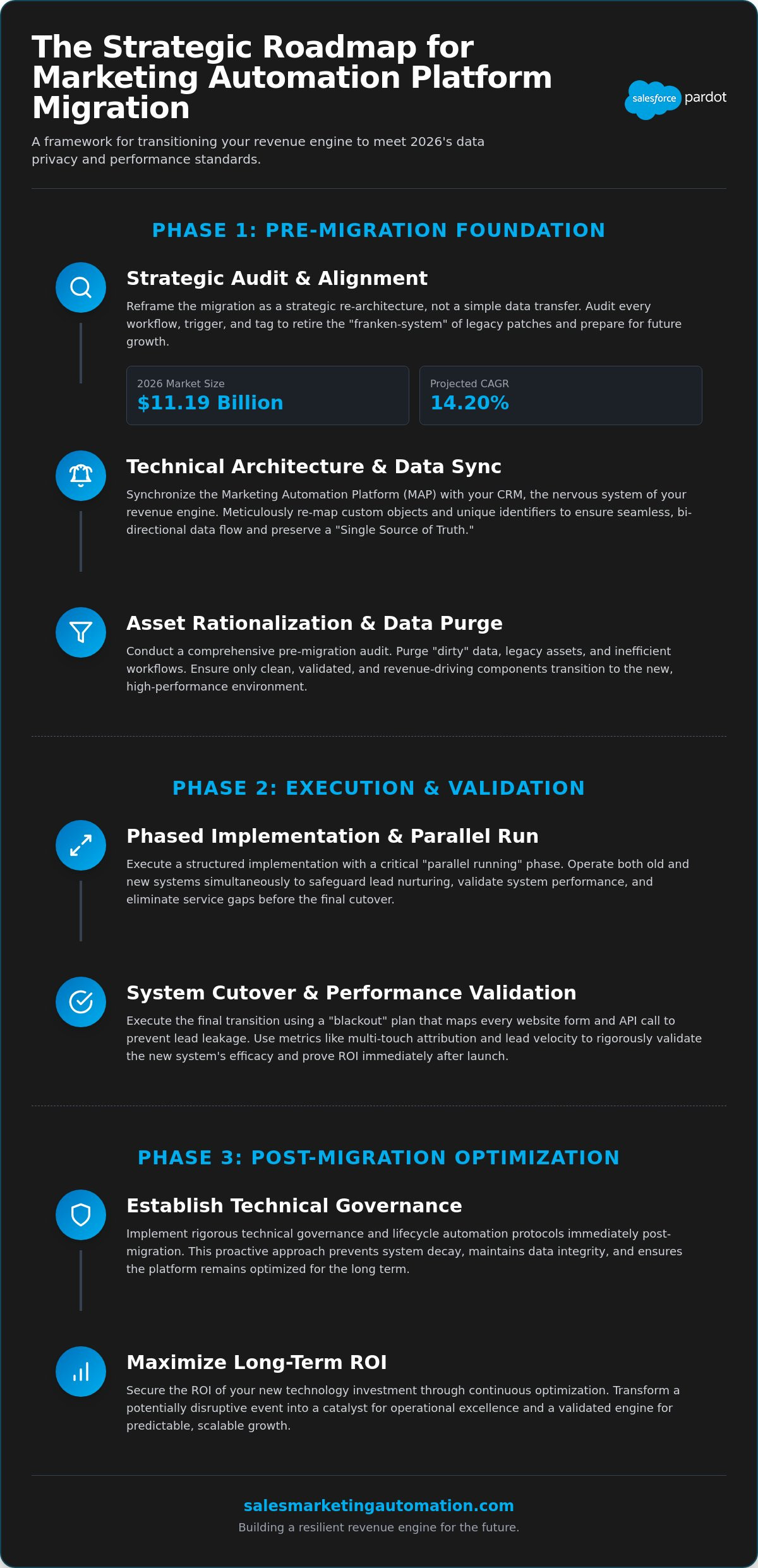
Initiate the implementation phase by building the foundational architecture within your new platform environment. A successful marketing automation platform migration requires more than just moving data; it demands a validated sequence of technical milestones that ensure system stability. We recommend a brief parallel running phase where your legacy system and the new platform operate simultaneously. This overlap allows you to compare data flow in real time and catch discrepancies before the legacy system is decommissioned. Engineered validation protocols are required to confirm that form submissions and lead sync accuracy meet the standards established during your initial audit. If you are navigating this transition within a complex CRM environment, our Salesforce and Pardot Consulting experts can ensure your automation logic remains perfectly synchronized throughout the move.
A documented cutover plan serves as your tactical manual for the final transition. It eliminates guesswork and reduces the risk of operational paralysis. This plan should include a granular timeline of every technical action, from DNS changes to API key rotations. By treating the cutover as a controlled architectural event, you minimize downtime and maintain the momentum of your active lead generation campaigns. Precision during this stage prevents the “data leakage” that often plagues less methodical migrations.
Run end-to-end tests on every critical conversion path to ensure a seamless prospect experience. Focus specifically on your high-value “Contact Us” flows and demo request forms, as these are the primary drivers of your sales pipeline. You must validate that lead scoring triggers correctly within the new environment, reflecting the logic mapped in the previous phases of this framework. Conduct a comprehensive User Acceptance Testing session with both Sales and Marketing teams. Their feedback is essential to confirm that the data appearing in the CRM is accurate, timely, and actionable for the revenue team. Testing in a sandbox environment first prevents technical errors from impacting live customer interactions.
Sequence the redirection of webhooks and tracking codes to ensure a clean break from the legacy system. This transition should occur during low-traffic periods to further reduce the risk of lead loss. Monitor synchronization logs in real time during the first 48 hours of the cutover to identify and resolve any immediate bottlenecks. Establish a “War Room” protocol for your technical team, providing a clear chain of command for immediate troubleshooting. This proactive stance allows you to address integration friction points before they escalate into systemic issues. Once the cutover is complete, perform a final audit of all active workflows to ensure every automated trigger is firing according to the new architectural specifications.
The successful completion of your marketing automation platform migration marks the beginning of a high-performance operational cycle rather than the end of a technical project. To secure the long-term value of your investment, you must transition from implementation to a sophisticated lifecycle automation strategy. This phase focuses on refining the architectural nuances of your new environment to ensure it scales with your 2026 revenue goals. Without a formal governance framework, even the most advanced systems succumb to “data rot” and fragmented workflows within months of launch. Establishing rigorous technical governance protocols ensures that every new tag, list, and automation follows the standardized logic you’ve carefully built during the transition.
Adoption remains a critical hurdle for many organizations post-migration. Continuous training programs are essential to ensure your marketing and sales teams fully leverage the new platform’s capabilities. High adoption rates correlate directly with data accuracy and campaign performance. Managed services provide a strategic solution for organizations that require elite technical oversight without the overhead of full-time specialists. By accessing fractional expertise, you can maintain a steady cadence of system improvements while your internal team focuses on creative strategy and high-level lead generation.
Implement a recurring optimization cadence to ensure your workflows and segmentation remain aligned with evolving market dynamics. Leverage the advanced reporting features of your new stack to prove the tangible ROI of the migration through clear attribution and cost-per-lead metrics. Using fractional marketing operations allows you to scale your technical capabilities dynamically, addressing complex API updates or database refinements as they arise. This proactive approach prevents the accumulation of technical debt and keeps your revenue engine running at peak efficiency. It ensures your team isn’t just using the software, but mastering it for competitive advantage.
Conduct a comprehensive post-migration audit approximately 90 days after the initial cutover to identify lingering friction points. This diagnostic review allows you to compare pre- and post-migration lead velocity and conversion rates using actual performance data. Analyze how your teams are interacting with the system to refine the tech stack based on real-world usage patterns and documented revenue impact. By measuring the growth in your marketing-sourced revenue, you validate the strategic decision to migrate and provide a clear roadmap for future technological investments. This final validation ensures your new ecosystem remains a clean, powerful, and compliant asset for years to come.
Mastering a marketing automation platform migration requires a shift from tactical execution to architectural precision. By prioritizing asset rationalization and rigorous CRM synchronization, you transform a potentially volatile transition into a controlled catalyst for growth. Success in 2026 depends on more than just moving files; it requires a validated framework that preserves intricate lead scoring models while ensuring absolute data integrity within an evolving regulatory environment. These strategic interventions prevent “data rot” and ensure your new ecosystem delivers immediate, measurable value.
Our team brings the experience of over 100 successful implementations as certified HubSpot and Salesforce partners to every project we undertake. We provide the strategic revenue focus necessary to link your technology stack directly to tangible business outcomes. Secure your migration success with a Strategic Technical Implementation and build a foundation that scales with your long-term ambition. Your future revenue engine is ready for its next phase of growth; now is the time to build it with precision.
A typical migration requires three to six months to complete with full strategic alignment. This timeline accounts for the essential pre-migration audit, technical logic translation, and the parallel running phase necessary to protect your data. While smaller ecosystems might transition in eight weeks, enterprise-level architectures with complex CRM integrations often require a more extended runway to ensure system stability.
The primary risks involve the loss of complex program logic and data mapping errors between disparate system architectures. Marketo utilizes a folder-based structure that differs significantly from HubSpot’s object-oriented environment, requiring a meticulous re-build of custom triggers. Failure to map these unique identifiers correctly can lead to orphaned records and broken lead syncs that disrupt your sales pipeline.
Do not migrate your entire historical database; instead, focus exclusively on records that provide ongoing revenue value. Moving “dirty” or stagnant data into a new environment creates immediate technical debt and compromises the accuracy of your 2026 reporting. Use this transition to purge hard bounces, unsubscribes, and low-intent contacts that no longer serve your strategic growth objectives.
Evaluate your internal team’s technical capacity and their ability to manage a high-stakes project without disrupting daily operations. Choose an internal path only if you possess deep architectural expertise and a dedicated project manager. Hire an agency for any marketing automation platform migration involving complex CRM synchronizations, as professional partners provide the fractional expertise needed to prevent lead leakage and secure a faster ROI.
A migration can cause a temporary gap in communication if you don’t implement a documented cutover plan. To maintain your revenue momentum, operate both systems in parallel for a brief period so active sequences can finish their cycles. This methodical transition ensures that prospects move through your funnel without experiencing the disruption of broken links or missing emails.
The cost of a professional migration depends on database volume, the number of active workflows, and the complexity of your integrated tech stack. You must also account for mandatory platform onboarding fees, such as the $3,000 to $7,000 requirements often seen with HubSpot Enterprise plans in 2026. Request a comprehensive audit to determine the specific resource allocation required for your unique business architecture.
Replicating a lead scoring model exactly is rarely possible because each platform utilizes proprietary logic and different data triggers. View this transition as an opportunity to recalibrate your model to reflect 2026 buyer behaviors and intent signals. Focus on translating the strategic intent of your scoring rather than attempting a one-to-one technical copy of legacy vanity metrics.
Successful transitions require a deep understanding of CRM database architecture and proficiency in API synchronization. Technical leads must know how to map custom objects between Salesforce and the automation platform to maintain a single source of truth. Additionally, your team needs skills in HTML and CSS to re-platform creative assets and ensure brand consistency across all new digital touchpoints. Engaging professional CRM implementation services can provide the architectural expertise required to navigate these technical demands while maintaining compliance with 2026 data privacy regulations.